Burning food in a stainless steel pan usually begins with rushed heat, not poor cooking skill. The pan may look harmless, but its surface stores intense heat. A quiet mistake can turn golden garlic into bitter black crumbs within seconds. Learning how to avoid burning food in stainless steel pans starts with controlling temperature, timing, and moisture.
Chef and food educator J. Kenji López-Alt often explains the importance of preheating stainless steel cookware. His practical advice is, “The key to preventing sticking is to make sure the pan is hot before adding the food.” That principle also helps prevent burning, but only when the heat remains moderate. A hot pan is useful. An overheated pan is not.
This guide will examine how experienced cooks manage stainless steel pans in real kitchens. You will learn when to preheat, how to test the surface with a few drops of water, and why oil should shimmer rather than smoke. Thin ingredients, such as sliced onions or fish fillets, need special attention. Their edges can scorch while the centers remain undercooked. I still rush this step sometimes, especially when several ingredients wait beside the stove. That impatience creates uneven browning and stubborn residue. A lower flame, a dry pan, and measured movement usually work better. You will also see when adding a splash of water can rescue a pan before burnt bits ruin the meal. Expect practical guidance, not perfect cooking promises. Mistakes still happen. The goal is noticing them earlier and responding calmly.
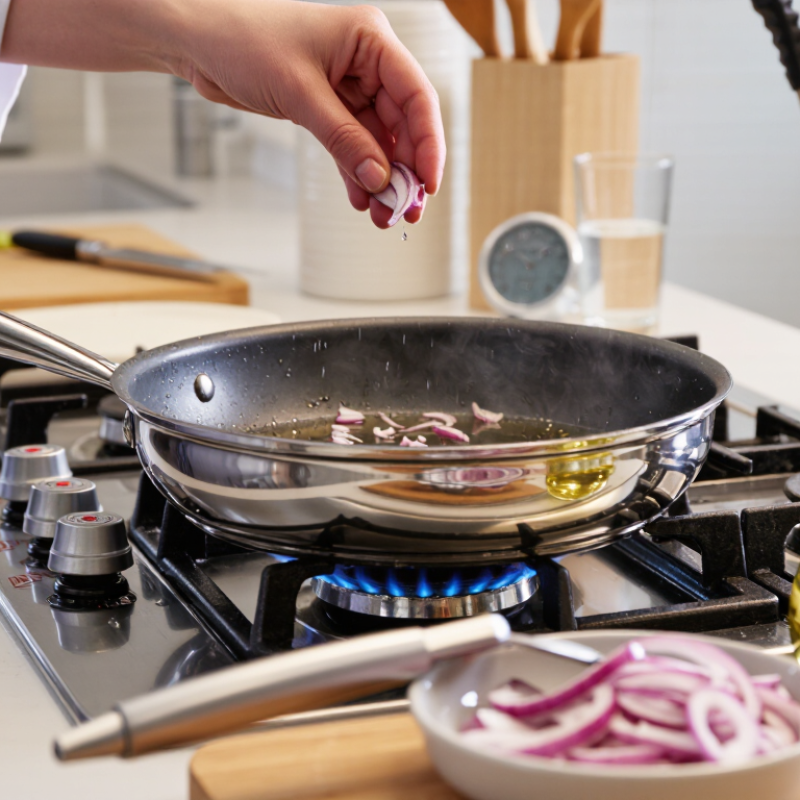
Choosing the Right Heat Level for a Steel Pan
Steel pans respond quickly, so high heat often creates a dark crust before food cooks through. For most sautéing, begin at medium-low to medium heat, around 150–180°C on the cooking surface. Preheat the dry pan for two minutes, then add oil and watch for a smooth, lightly shimmering surface. If the oil smokes immediately, the pan is too hot. Turn the burner down before adding food.
A practical water test can help. A few droplets should glide briefly, not vanish instantly or explode into steam. Add dry ingredients, because moisture can cause sudden splattering and uneven browning. Leave space between pieces. Crowding lowers the temperature, while an empty steel surface keeps climbing. For delicate foods, reduce heat after the first sear and use the pan’s stored heat to finish cooking.
Food safety still matters more than color. USDA FSIS guidance lists 145°F for whole cuts of beef, pork, lamb, and veal, 160°F for ground meats, and 165°F for poultry. The FDA Food Code 2022 uses 135°F as a hot-holding threshold. A surface thermometer helps, but it cannot measure the food’s center. I still scorch onions occasionally when multitasking. That is a useful warning: heat settings are not universal, since burner power, pan thickness, and ingredients change the result. Lower heat earlier than you think.
| Heat level | Approximate pan surface temperature* | Suitable cooking tasks | Recommended approach | Signs the heat is too high | Correction |
|---|---|---|---|---|---|
| Low | Approximately 95–150°C (200–300°F) |
Melting butter, warming cooked food, gently reducing sauces, cooking delicate foods | Use a small burner setting and stir foods that contain milk, sugar, or starch. | Food remains pale and cooks very slowly; oil moves sluggishly across the surface. | Increase the heat gradually rather than moving directly to high heat. |
| Medium-low | Approximately 150–175°C (300–350°F) |
Eggs, pancakes, garlic, onions, reheating leftovers, thick sauces | Preheat briefly, add fat, and keep ingredients moving when they contain sugar or dairy. | Butter browns rapidly, garlic darkens within seconds, or sauce sticks around the edges. | Lift the pan from the burner briefly and reduce the setting by one level. |
| Medium | Approximately 175–205°C (350–400°F) |
Most vegetables, fish, chicken pieces, tofu, and general sautéing | Preheat until a few water droplets glide across the pan, dry the pan, then add oil and food. | Oil smokes quickly, food scorches before browning, or the pan develops dark hot spots. | Remove the pan from heat, wipe out burnt residue safely, and restart at a lower setting. |
| Medium-high | Approximately 205–230°C (400–450°F) |
Searing meat, browning mushrooms, stir-frying small batches, and rapid sautéing | Use a thin, even layer of high-heat cooking oil and avoid overcrowding the pan. | Persistent smoke, an acrid smell, or browned food with a raw center. | Turn the heat down, add ingredients in smaller batches, and allow the pan to recover between batches. |
| High | Above approximately 230°C (450°F) |
Brief searing or boiling water when rapid heating is specifically needed | Use only for short periods and stay beside the pan; do not leave oil unattended. | Oil smokes heavily, spices burn immediately, or food blackens before it cooks through. | Remove the pan from the burner at once. Never add water to hot oil; allow it to cool safely. |
Best everyday practice: Start at medium or medium-low heat, preheat gradually, add oil only after the pan is warm, and lower the heat as soon as the food begins to brown.
*Surface temperatures are approximate and vary with pan thickness, burner power, food quantity, and cooking time. A surface thermometer provides a more reliable reading than a visual test alone.
Heat the empty pan over medium heat for two or three minutes. Add a few water drops. They should bead and glide briefly. If they vanish instantly, the pan is too hot.
Add a thin layer of oil after the pan feels properly warm. It should look fluid and lightly shimmer. Never let it smoke. I sometimes add too much oil, but that makes food greasy and harder to control.
Pat meat, fish, or vegetables dry before placing them in the pan. Surface moisture creates steam and delays browning. Wet food may stick more easily. Small details matter.
Use medium heat, enough oil, and a single layer of food. Leave small spaces between pieces. Let the first side form a crust before moving it. If food resists, wait another minute instead of scraping.
Crowding traps steam and lowers the pan temperature. Food may turn pale instead of developing a browned surface. Use separate batches when necessary. It takes longer.
Add them when the main ingredient is nearly cooked. Garlic and fresh herbs can burn quickly in a hot steel pan. Butter may also darken fast. I still misjudge this sometimes.
Add firm vegetables before softer ones. Dense pieces need more time near the heat. Softer vegetables can follow later. Watch their texture, not only the clock.
Keep a small splash of water nearby. Add it carefully while the pan is warm. The pan may hiss sharply. Loosen the bits with a wooden utensil, and reduce the heat if necessary.
Avoiding burned food in a steel pan starts with choosing the right heat. Use medium or medium-low heat for most cooking, and allow the pan to preheat gradually rather than leaving it empty over high heat. A simple water-drop test can help: if a drop glides across the surface, the pan is ready, but if it evaporates immediately, the pan is too hot. Add a thin layer of oil only after preheating, then place ingredients in the pan once the oil looks fluid and lightly shimmers.
Learning how to avoid burning food in stainless steel pans also requires controlling moisture and adjusting the temperature during cooking. Dry ingredients before adding them, avoid overcrowding, and give food time to form a natural crust before turning it. Reduce the heat when browning happens too quickly, and increase it slightly when adding cold or moist ingredients. For delicate foods, steady low heat works best, while meats and vegetables may need brief higher heat followed by gentler cooking.

 Irmos Homes