what temperature is best for stainless steel cooking depends on the food, the pan, and the result you want. Stainless steel has no single ideal setting. For everyday sautéing, a moderate surface temperature around 350–400°F can brown vegetables and proteins without immediately scorching them. For a hard sear, cooks may go hotter, but oil smoke and uneven heating are warning signs. A heavy skillet warms more slowly, then holds heat. That detail matters.
Cookware guidance from All-Clad recommends matching heat to the task and avoiding unnecessary high heat. Food safety is a separate measure. The USDA FSIS Safe Minimum Internal Temperature Chart sets targets of 145°F for fish and whole cuts of beef, pork, and lamb, followed by a three-minute rest; ground meats need 160°F, and poultry needs 165°F. These are internal food temperatures, not pan temperatures. Confusing the two can leave dinner either undercooked or dry.
Food-science writer J. Kenji López-Alt’s published stainless-steel advice emphasizes preheating the pan before adding oil. That simple step helps food release and brown more evenly. Still, it is not foolproof. A crowded pan can cool quickly, and thin oil can smoke before the food is ready. This guide explores practical temperature ranges, signs your skillet is ready, and ways to adjust heat as you cook. A little trial and error belongs here.
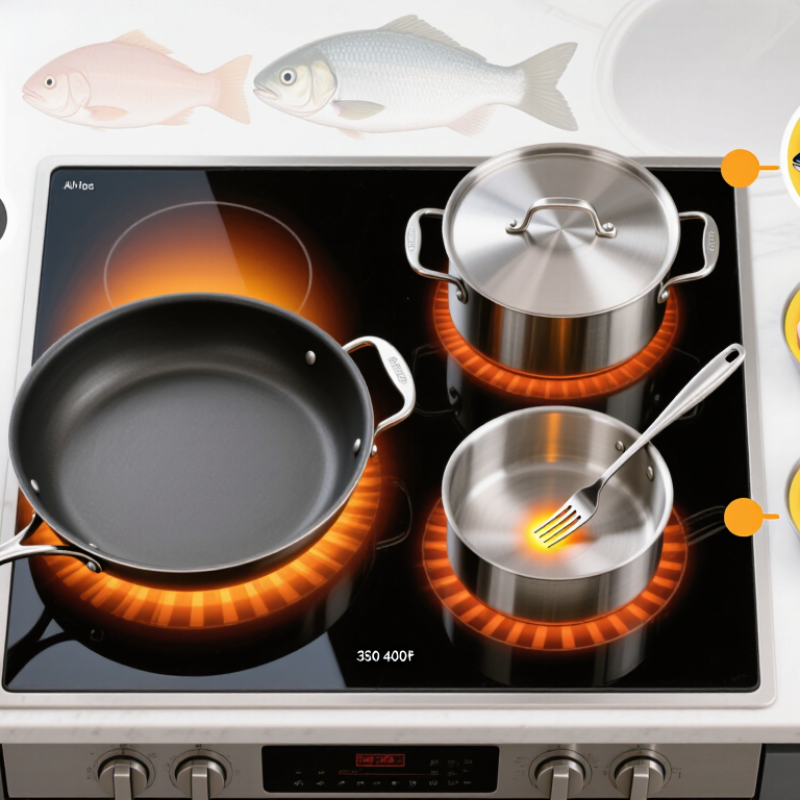
What Is the Best Temperature for Stainless Steel Cooking?
How Stainless Steel Cookware Responds to Heat
Stainless steel has no single ideal cooking temperature. The right heat depends on the food, pan construction, and cooking method. A thick, layered pan spreads heat more evenly, while a thinner pan can develop hot spots. Stainless also takes time to warm up and cool down. Give it a few minutes over medium heat, rather than turning the burner to high immediately. Small changes matter.
When a dry pan is preheated, a drop of water may bead and glide across the surface. This is a rough cue, not a precise temperature reading. Add oil only after preheating, then lower the heat if it smokes; smoking oil can taste bitter. For eggs or delicate fish, moderate heat usually gives you more control. For browning meat, use a hotter pan, but watch the surface closely. Food may stick at first, then release as a browned crust forms. It is tempting to turn it too soon.
Tips: Preheat gradually, add oil, and listen for a steady sizzle. If food darkens too quickly, reduce the heat and let the pan settle. Stainless responds well to adjustment, but it does not correct rushed timing.
| Cooking Task | Approximate Pan-Surface Temperature | Typical Heat Setting | How Stainless Steel Responds | Practical Tip |
|---|---|---|---|---|
| Keeping food warm or gently melting | 200–300°F (93–149°C) | Low | Steel heats gradually and retains heat, so gentle heat can be enough to maintain warmth or melt ingredients carefully. | Use low heat and stir often; for chocolate, a double boiler helps reduce the risk of scorching. |
| Gentle simmering | About 180–205°F (82–96°C) for the liquid | Low to medium-low | The pan transfers heat to the liquid, whose temperature stays near its local boiling point while it simmers. | Bring liquid to a boil if needed, then reduce the heat until only small bubbles appear. |
| Cooking eggs or other delicate foods | About 250–325°F (121–163°C) | Low to medium-low | A preheated steel surface can brown food quickly; a cooler surface and added fat help limit sticking and over-browning. | Preheat gently, add butter or oil, and adjust the heat as the pan responds. |
| Sautéing vegetables | About 300–375°F (149–191°C) | Medium to medium-high | The pan can develop an even sear, but its retained heat may continue cooking food after the burner is lowered. | Preheat the pan, add oil, then add dry ingredients without overcrowding. |
| Pan-searing meat | About 400–500°F (204–260°C) | Medium-high to high, briefly | A hot surface promotes browning. Stainless steel tolerates high cooking temperatures, but an empty pan can overheat quickly. | Use a well-ventilated kitchen, add a suitable cooking oil, and avoid leaving the empty pan unattended. |
| Deep-frying in a pot | Usually 325–375°F (163–191°C) for the oil | Medium to medium-high, adjusted as needed | The pot conducts heat to the oil; adding food lowers the oil temperature, and the pot’s thermal mass affects recovery time. | Monitor the oil with a thermometer, leave ample headroom, and never fill the pot more than halfway with oil. |
Note: These are practical approximate ranges, not universal settings. Pan thickness, burner type, food quantity, and cookware construction all affect heating. Burner settings do not correspond to a precise pan temperature. Stainless steel is suitable for high-heat cooking, but avoid prolonged high heat with an empty pan; follow the cookware maker’s care instructions.
Use medium to medium-high heat, around 300–375°F. Add oil to a warm pan; it should shimmer, not smoke.
Aim for about 400–450°F at the cooking surface. Pat meat dry and leave space between pieces. Crowding can lead to steaming.
Use low to medium heat, roughly 250–325°F. Look for a gentle sizzle. Keep it gentle.
A few drops of water may gather and glide across the surface. It is only a rough cue, not a thermometer.
Cook poultry to 165°F. Whole cuts of pork and beef should reach 145°F, then rest for three minutes. Ground meat should reach 160°F.
Cook fish to 145°F. A food thermometer gives a clearer answer than browned edges.
Keep them near 185–205°F, with small, steady bubbles. A rolling boil is hotter than needed.
Lower the heat and add a small splash of liquid. It may not fix every pan hot spot, but it can help.
Stainless steel cookware heats efficiently and responds quickly to changes in the stove, so choosing the right heat level matters more than relying on one fixed temperature. The answer to “what temperature is best for stainless steel cooking” depends on the food and cooking method. Low to medium heat is suitable for gentle cooking, while medium-high heat can help brown or sear ingredients. Very high heat is rarely necessary and may cause food to scorch or stick.
For better results, preheat the pan gradually, then add oil and adjust the heat as needed. A small water droplet that forms a bead and moves across the surface can indicate that the pan is ready for searing. Different foods offer useful cues: listen for a steady sizzle, watch for browning, and lower the heat if oil smokes or food darkens too quickly. Pan thickness, burner strength, food quantity, and whether ingredients are cold also affect cooking temperatures, so observe the food and regulate the heat throughout.

 Irmos Homes