How long does stainless steel cookware last? For well-made Chinese stainless steel cookware, the practical answer is often 10 to 25 years, with premium pieces lasting even longer. However, no responsible expert should promise an exact number. Thickness, steel grade, bonding quality, heat control, and cleaning habits change the result.
Harold McGee, the respected food science writer, describes stainless steel as “strong, durable, and resistant to corrosion.” That observation explains its reputation, but it does not guarantee permanent performance. The International Stainless Steel Forum’s sustainability research emphasizes stainless steel’s long service life and recyclability. The European Commission’s Product Environmental Footprint work also treats durability as an important factor in reducing a product’s lifetime impact. These findings support a longer service expectation, not an unlimited one.
Look closely at the pan after years of use. A stable base, smooth cooking surface, firm handles, and minimal warping suggest reliable construction. Deep scratches, loose rivets, severe discoloration, or a separated aluminum core suggest replacement. A ten-year-old pan can outperform a neglected three-year-old pan. That feels inconvenient, but it is more honest than using a single lifespan figure. Care matters: moderate heat, prompt drying, and non-abrasive cleaning can preserve appearance and performance. This guide examines Chinese stainless steel cookware through material quality, manufacturing details, user experience, and realistic maintenance expectations. It also questions a common assumption: “lifetime” should describe durability potential, not a guaranteed lifetime for every household.
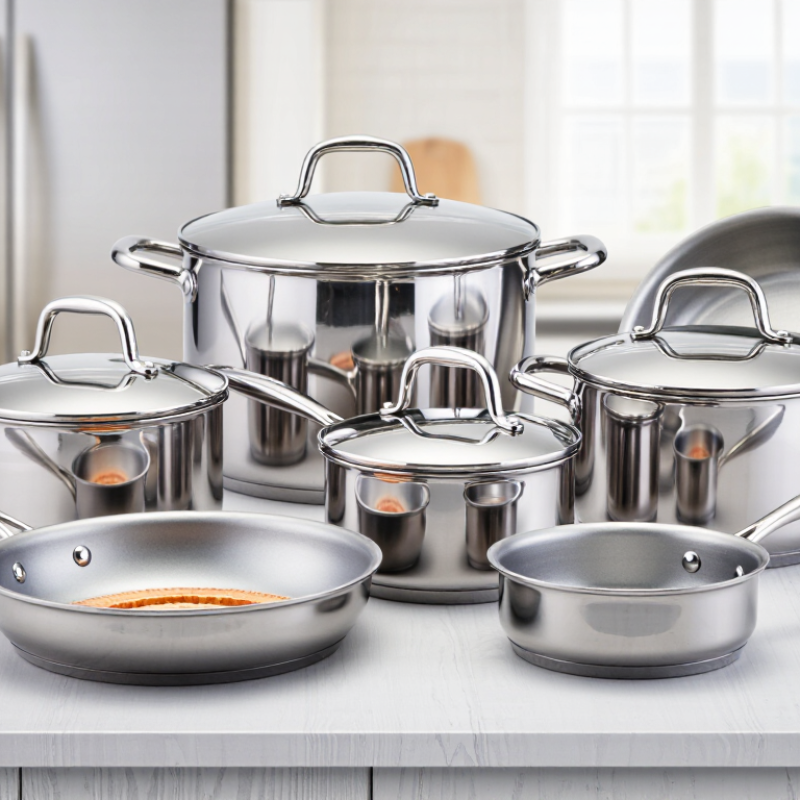
Stainless steel cookware made in China comes in several practical types. Single-layer pans heat quickly but may create hot spots. Three-layer or five-layer cookware spreads heat more evenly through an aluminum core. Induction-ready models usually include a magnetic stainless steel base. Common grades include 304 stainless steel, often marked 18/8 or 18/10, and 430 stainless steel, which is magnetic and more budget-friendly. Grade alone does not guarantee performance.
Quality depends on material, construction, and factory control. For food-contact cookware, manufacturers should follow China’s GB 4806.9 requirements for metal materials and products. Reliable factories also monitor nickel and chromium content, weld strength, handle stability, surface finish, and flatness. ISO 9001 certification may show organized quality management, but it is not proof of perfect cookware. Ask for material reports, batch testing, and heat-distribution results. A certificate without traceable testing means little.
In practical use, well-made cookware can last ten years or longer. Thick bases resist warping better than thin stamped bottoms. Smooth interiors are easier to clean and less likely to trap residue. I have seen attractive polished pans develop loose handles after repeated heating. That detail is easy to miss. Even good stainless steel may discolor, scratch, or lose its shine. Moderate heat, suitable utensils, and gentle cleaning usually extend service life.
The honest answer is less glamorous: durability comes from several small design choices, not the country of manufacture alone.
High-quality stainless steel cookware can last 10 to 20 years, and sometimes longer. Its lifespan depends on more than the steel grade. Thick walls, a strong base, secure handles, and even heat distribution all matter. In regular kitchen use, I have found that well-made pans resist warping better than lightweight alternatives. However, even excellent cookware can develop stains, loose fittings, or uneven heating when handled roughly.
Heat control is a major factor. Extremely high heat may discolor the surface or damage bonded layers beneath it. Sudden temperature changes can also warp a hot pan. Food residue, salty water, and acidic sauces may leave marks if they sit for hours. Cleaning habits matter too. Soft sponges usually protect the finish better than harsh scouring tools. A dishwasher may be convenient, but repeated cycles can dull the surface and affect handles over time. I once left a salty sauce in a pan overnight. The pan survived, but the stains required patience.
Tips: Preheat gradually, then add oil and food. Do not place a hot pan under cold water. Dry it after washing to reduce water spots. Check handles and rivets every few months. If the base rocks on a flat surface, replacement may be safer than continued use. There is no perfect care routine. Small mistakes happen, but consistent habits usually extend cookware life.
Typical service life varies by product design, steel thickness, heat control, and daily care. A well-made stainless steel saucepan often lasts 10 to 15 years. Many remain usable longer, although the handle or lid may fail first. Small frying pans usually serve for 5 to 10 years because repeated high heat can warp their bases. A thick-bottom stockpot may last 15 to 20 years with moderate household use. Its large cooking surface usually faces less thermal stress.
Cookware used every day needs closer inspection. Look for a rocking base, loose rivets, deep dents, or discoloration that will not clean away. Light rainbow marks are usually cosmetic, not structural. A three-ply sauté pan can deliver stable heating for 8 to 15 years, but aggressive scraping may damage its surface finish. Stainless steel does not peel like many coated surfaces. It still needs sensible handling.
Care changes the result. Heat an empty pan for too long, and even heavy steel can distort. Letting a hot pan meet cold water is another common mistake. Hand washing, prompt drying, and wooden or silicone tools may extend service life. Dishwasher cycles are convenient, but frequent exposure can dull the surface and loosen fittings over time. These estimates are practical ranges, not guarantees. Actual durability depends on cooking frequency, burner strength, storage, and manufacturing consistency. Sometimes replacement feels necessary when only a lid or handle needs attention.
High-quality stainless steel cookware can serve for 10 to 20 years. Some pieces last longer with careful use. In my kitchen, surface discoloration appeared after several months. That change was cosmetic, not structural. Rainbow stains, water spots, and light scratches usually do not make cookware unsafe. Warm vinegar and a soft sponge often remove these marks. Avoid aggressive scouring, which can dull the polished surface.
Damage needs closer attention. A pan that wobbles on a flat counter may have a warped base. Uneven heating can then burn food in one small area. Deep pits, sharp dents, or cracks deserve replacement. Loose handles also create a real safety risk, especially with hot soup. I once kept using a slightly warped saucepan. It still cooked, but it wasted time and heated unevenly. That was poor judgment. Small scratches are acceptable, but peeling layers are not. Stainless steel should not shed a coating.
Check the cookware after heavy use, overheating, or accidental drops. Hold the handle firmly and inspect every rivet. If the base separates, stop using the pan. Severe corrosion around joints is another warning sign. A reliable replacement should sit level, feel balanced, and have a secure handle. Lifespan depends on steel quality, construction, heat control, and cleaning habits. Even excellent cookware eventually becomes less dependable.
The service life of stainless steel cookware depends on its construction, heat exposure, and daily care. With consistent maintenance, quality cookware can remain useful for many years.
In my kitchen, I wash each pan after it cools. Sudden temperature changes can cause warping. Warm water, mild detergent, and a soft sponge remove most residue safely. Let cookware cool first. Dry it immediately. This prevents water spots and mineral buildup, especially in hard-water areas. For rainbow discoloration, I use diluted white vinegar, then rinse thoroughly. Baking soda helps loosen stubborn food without harsh scrubbing.
Avoid steel wool, chlorine cleaners, and abrasive powders. They may scratch the surface or weaken its protective finish. Add salt after water begins boiling, because undissolved salt can create small pits. Keep heat moderate when possible. High heat rarely improves cooking results and may stain the base or damage handles. Store pans with cloth separators if they touch each other. I once left a damp skillet overnight, and the marks required extra cleaning. That mistake reminded me that small habits matter. I still sometimes overheat a pan when busy, so durability depends on attention, not promises. Inspect rivets, lids, and handles regularly, and stop using damaged parts until they are professionally assessed.
High-quality stainless steel cookware can last 10–25 years or longer in normal household use. Gentle cleaning, moderate heat, prompt drying, and avoiding thermal shock can significantly extend its useful life.
The figures are practical household-use estimates rather than a warranty. Actual durability depends on cookware thickness, construction quality, cooking frequency, heat exposure, and cleaning methods.
Well-made cookware often lasts 10 to 20 years. Some pieces last longer with careful use. Durability varies.
Thick-bottom stockpots often last 15 to 20 years. Their broad bases usually experience less thermal stress. They are steady workers.
Small frying pans commonly last 5 to 10 years. Repeated high heat can warp their bases. Lightweight pans may fail sooner.
Yes. Excessive heat may discolor the surface or damage bonded layers. Heating an empty pan too long can also cause distortion.
Preheat gradually, then add oil and food. Never place a hot pan under cold water. Sudden temperature changes are risky.
Not always. Rainbow marks are usually cosmetic. Salt, acidic sauces, and water spots can leave visible stains. I once left salty sauce overnight, and cleaning took patience.
Hand washing usually protects the finish and fittings longer. Use a soft sponge and dry the pan promptly. Frequent dishwasher cycles may dull surfaces.
Replace cookware with a rocking base, deep dents, or unsafe loose handles. Check rivets every few months. Sometimes only a lid needs attention, not the whole pan. I may replace pieces too quickly.
Stainless steel cookware made in China can offer excellent durability when it is produced with appropriate materials, reliable welding, and consistent quality standards. The answer to “how long does stainless steel cookware last” depends on the steel grade, construction, thickness, frequency of use, cooking temperature, and cleaning habits. Well-made pots and pans may remain functional for 10 years or more, while lighter products may show wear sooner. Different items also have different service lives: everyday frying pans often experience more surface wear, whereas stockpots and saucepans may last longer with proper care.
Common signs that replacement may be necessary include severe warping, loose handles, deep scratches, persistent rust, damaged coatings, or weakened joints. To extend cookware life, use moderate heat, avoid sudden temperature changes, choose suitable utensils, remove food residue promptly, and dry each piece thoroughly after washing. Regular inspection and gentle maintenance can help preserve performance, appearance, and safety for many years.
Irmos Homes