2026 Top How to Remove Stains from Stainless Steel Cookware

Time:2026-09-23 Author:Charlotte
0%

A stainless steel pan can look spotless, yet one blue rainbow, brown scorch ring, or cloudy film may remain after washing. The problem is rarely simple dirt. Heat, mineral-rich water, salt, grease, and acidic foods can leave different marks on the same surface.

This guide explains how to remove stains from stainless steel cookware without damaging its finish. Practical kitchen testing shows that identification matters. A white haze often points to mineral deposits. Brown specks may indicate overheated oil. Stuck protein needs a different method from burnt sugar. One approach cannot solve every stain.

Small details matter.

The FDA Food Code 2022 emphasizes smooth, corrosion-resistant, and cleanable food-contact surfaces. NSF/ANSI 2 also sets hygiene requirements for commercial food equipment. These standards support a careful principle: use effective cleaning methods that preserve the cooking surface. Grand View Research’s stainless steel cookware market analysis highlights durability and corrosion resistance as major product advantages. Those benefits depend on proper care, not aggressive scrubbing.

This 2026 guide focuses on low-risk techniques, including soaking, controlled heating, baking soda, diluted vinegar, and non-abrasive cleaning tools. It also explains when a mark is harmless discoloration rather than damage. I have learned that “stronger” cleaning is not always better. Steel wool can remove a stain quickly, but it may create scratches that collect residue later. Some advice online also sounds convincing but lacks reliable testing. That deserves a second look.

Clear steps. Fewer guesses. A cleaner pan.
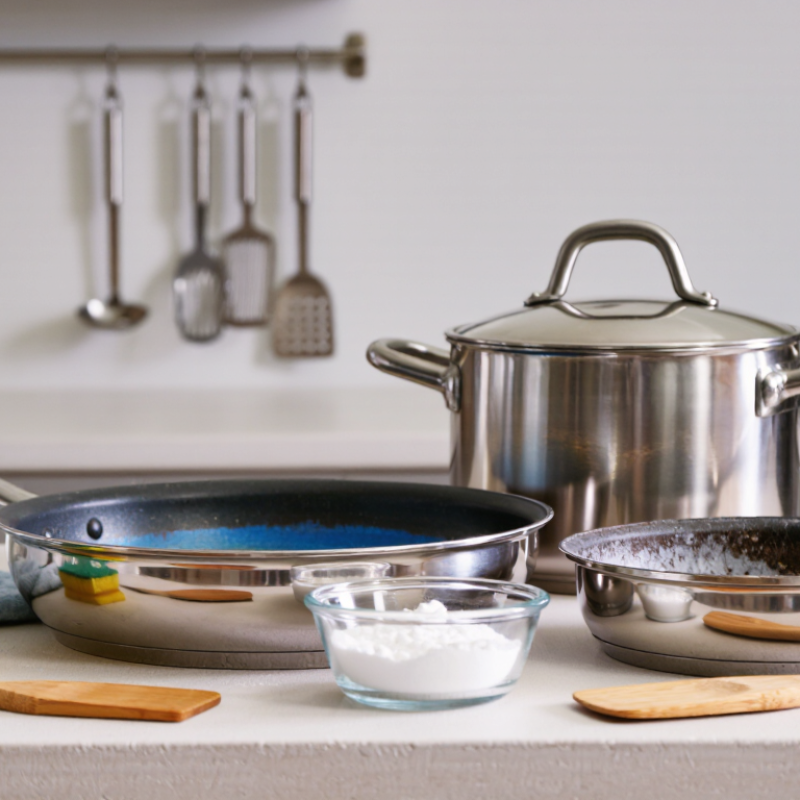
2026 Top How to Remove Stains from Stainless Steel Cookware

Identify the Stainless Steel Stain and Assess the Cookware’s Condition

Before removing a stain, identify what you are seeing. A rainbow sheen usually comes from heat exposure, not permanent damage. White, cloudy spots often indicate mineral deposits from hard water. Brown or black patches may be burned oil or overheated food. Small rust-colored marks deserve closer inspection, especially near scratches or edges.

Let the cookware cool completely. Wash it with warm water and mild dish soap, then dry it under bright light. A smooth surface usually means the mark is only on the surface. Roughness, deep pits, peeling layers, or a warped base suggest more serious wear. Do not scrape blindly. I have sometimes mistaken cooked-on oil for rust, and that mistake can lead to unnecessary abrasion. A quick guess can be wrong. Check carefully.

Tips: Photograph the stain before cleaning. Note its color, texture, and location. Test any cleaning method on a small area first. Avoid aggressive scouring if the steel feels thin, deeply scratched, or uneven. If the cookware has a loose handle, exposed damage, or deep pitting, cleaning may not restore safe performance. Fresh stains are usually easier to assess than old, layered residue.

2026 Top: How to Remove Stains from Stainless Steel Cookware

Identify the stainless steel stain first, then assess the cookware’s condition before choosing a cleaning method.

How to read the chart: The screening score ranges from 1 to 5. A score of 1 indicates a surface-level mark that is usually easy to clean. Scores of 4–5 indicate possible surface damage, pitting, or corrosion that may not be safely removable with ordinary cleaning.

Gather Safe Cleaning Supplies for Stainless Steel Surfaces

2026 Top How to Remove Stains from Stainless Steel Cookware

Before treating a stain, gather gentle supplies that will not scratch the steel. I keep two clean microfiber cloths, mild dish soap, warm water, and a soft nylon brush nearby. A small bowl helps control the cleaning solution. For baked-on food, add plain baking soda to make a loose paste. Use protective gloves if your skin reacts easily.

Avoid steel wool, rough scouring pads, chlorine bleach, and strong oven cleaners. They can damage the surface or leave hidden residue. Never mix cleaning products. That mistake can create dangerous fumes. I also keep a dry cotton towel ready, because water spots often appear after air-drying. Distilled water may reduce cloudy marks in areas with hard tap water.

Test every method on a hidden section first. I learned this after rubbing too firmly and creating a dull patch near a handle. The cloth felt soft, but pressure still mattered. Work with the grain, not against it, using short strokes. For a small stain, diluted white vinegar may help, but rinse the cookware thoroughly afterward. Do not let acidic solutions sit for long periods. Check the surface under bright kitchen light before using stronger methods.

2026 Top How to Remove Stains from Stainless Steel Cookware - Gather Safe Cleaning Supplies for Stainless Steel Surfaces

Practical stain-removal methods for common stainless steel cookware problems. Test any method on a small, inconspicuous area first.
Stain or Residue Recommended Supplies Cleaning Procedure Typical Contact Time Important Safety Notes
Burnt-on food Warm water, mild dish detergent, nylon scrub pad, soft sponge Cover the residue with warm, soapy water. Soak, then loosen the softened food with a nylon pad or soft sponge. Repeat rather than using force. 20–30 minutes Allow the pan to cool before adding water. Avoid thermal shock from placing a hot pan in cold water.
White mineral or hard-water spots White vinegar, water, microfiber cloth, mild dish detergent Apply a solution of equal parts white vinegar and water to the spots. Wipe gently, rinse thoroughly, and dry immediately. 5–10 minutes Do not leave acidic solutions on the surface for extended periods. Never mix vinegar with bleach or other cleaners.
Rainbow or heat discoloration White vinegar, water, soft sponge, clean towel Dampen the sponge with diluted vinegar, wipe in the direction of the steel grain, rinse with clean water, and dry completely. 1–5 minutes Heat tint is usually cosmetic. Prevent recurrence by using moderate heat and avoiding an empty pan over high heat.
Grease and oily film Warm water, grease-cutting dish detergent, soft sponge, microfiber cloth Remove excess oil with a paper towel. Wash with warm water and detergent, rinse well, and dry to prevent streaks. 5–10 minutes Use adequate ventilation if cleaning a large amount of greasy residue. Do not pour cooking oil down the drain.
Dried starch or milk residue Warm water, mild dish detergent, nylon brush or non-abrasive pad Soak the cookware in warm, soapy water. Gently brush softened residue, then wash, rinse, and dry. 15–30 minutes Avoid scraping with knives or metal tools, which can leave scratches.
Light tea, coffee, or food stains Baking soda, water, soft sponge, clean towel Make a loose paste with baking soda and water. Apply gently, wipe with the grain, rinse thoroughly, and dry. 5–10 minutes Use light pressure. Baking soda is mild but can still dull the finish if rubbed aggressively.
Water streaks after washing Clean water, microfiber cloth, diluted white vinegar if needed Rinse away detergent residue. Wipe dry immediately with a microfiber cloth; use diluted vinegar for persistent mineral streaks. 1–3 minutes Drying promptly helps reduce mineral deposits and water marks.
Persistent, heavily carbonized residue Warm water, mild detergent, baking soda, nylon scraper, protective gloves Soak first. Apply a baking-soda paste to remaining residue and use a nylon scraper or pad with gentle pressure. Rinse and wash afterward. 30–60 minutes Do not use steel wool, chlorine bleach, oven cleaner, or abrasive powders unless the cookware manufacturer specifically permits them.
General care: Wash stainless steel cookware with mild detergent, rinse thoroughly, and dry promptly. Follow the cookware manufacturer’s care instructions, especially for polished, coated, or specially finished surfaces.

Remove Fresh Stains with Gentle Soap and Warm Water

2026 Top How to Remove Stains from Stainless Steel Cookware

Fresh stains respond best to gentle soap and warm water. Let the pan cool before cleaning. Add a few drops of mild dish soap to warm water. Wet a soft sponge, then wipe with the steel’s grain. Avoid circular scrubbing. It can leave visible swirls.

Rinse the surface thoroughly. Dry it immediately with a clean microfiber cloth. Drying matters. Water spots often form when minerals remain on the metal. The U.S. Department of Agriculture advises washing food-contact surfaces with hot, soapy water after food preparation. Its guidance supports this simple method, but warm water is safer for handling and usually sufficient for fresh residue. Avoid steel wool and harsh abrasive powders. They may scratch the protective surface. According to the CDC’s Burden of Foodborne Illness study, contaminated food causes about 48 million illnesses and 128,000 hospitalizations annually in the United States. Clean cookware cannot prevent every risk, but removing residue reduces avoidable buildup.

Some stains resist this approach. That is normal. Wait until the pan is dry, then inspect the mark under bright light. If residue remains, repeat the soap-and-water process instead of increasing pressure. Test a small area first. My own cleaning mistake was scrubbing too soon; the stain faded, but the finish looked dull. Gentle cleaning takes longer, sometimes frustratingly so, yet it protects the cookware’s appearance.

Treat Burn Marks, Mineral Deposits, and Discoloration Safely

2026 Top How to Remove Stains from Stainless Steel Cookware

Treat Burn Marks, Mineral Deposits, and Discoloration Safely

Stainless steel cookware can look ruined after one overheated meal. Usually, the surface needs patience, not aggressive scrubbing. Let the pan cool completely before cleaning.

I once rushed this step and splashed water onto a hot base. The sudden steam was an unnecessary hazard.

For dark burn marks, cover the area with warm water and two tablespoons of baking soda. Simmer gently for five to ten minutes. Turn off the heat, then let the water cool. Use a soft sponge or nylon brush with the steel’s grain. Repeat if needed.

Avoid steel wool because it can leave scratches that trap future stains.

Mineral deposits often appear as white rings after hard-water use. Wipe them with diluted white vinegar, then rinse thoroughly.

Never mix vinegar with chlorine-based cleaners.

For rainbow discoloration, a brief vinegar wipe may restore the finish. Do not leave acid sitting on the surface for hours. Dry the cookware immediately with a clean towel. This small step prevents new water spots.

Check the manufacturer’s care instructions when available. Some handles, coatings, or bonded bases need different treatment.

My own mistake was assuming every stainless surface could tolerate the same pressure. It cannot.

When a mark remains after gentle cleaning, accept a little discoloration rather than damaging the metal.

Rinse, Dry, and Polish the Cookware to Prevent Future Stains

2026 Top How to Remove Stains from Stainless Steel Cookware

Rinse stainless steel cookware soon after cooking. Hot water loosens salt, starch, and oily residue before they dry. Let the pan cool slightly first. Sudden temperature changes can warp some cookware. Use a soft sponge and mild dish soap for daily cleaning. Avoid leaving salty water inside the pan overnight. It can create cloudy marks and small spots.

Dry the cookware immediately with a clean, soft towel. Air-drying often leaves mineral rings, especially in hard-water areas. Check the rim, handles, and rivets because water hides there. I used to dry only the cooking surface. That habit caused dull patches near the handle. A quick wipe takes less than a minute, but I still forget sometimes.

Polish the dry surface with a clean microfiber cloth. Follow the metal’s grain instead of rubbing in circles. For light water stains, use a paste of baking soda and water. Apply gentle pressure, then rinse thoroughly. Do not let abrasive powder sit on the surface. Residue may become another stain. Dry and polish again until the steel feels smooth. I once polished too aggressively and created a visible dull area. That mistake taught me to use patience, not force. When stains persist, stop and inspect the cookware’s care instructions before trying stronger methods.

FAQS

How should I clean a pan with dark burn marks?

Let the pan cool completely. Cover the mark with warm water and two tablespoons of baking soda. Simmer gently for five to ten minutes. Turn off the heat and wait. Use a soft sponge or nylon brush with the steel’s grain. Repeat if necessary.

Can I use steel wool on stainless steel cookware?

It is better to avoid steel wool. It can scratch the surface and trap future stains. Use a soft sponge or nylon brush instead. Scratches are hard to undo.

How can I remove white mineral rings?

Wipe the rings with diluted white vinegar. Rinse the cookware thoroughly afterward. Dry it immediately with a clean towel. This helps prevent new water spots.

What should I do about rainbow discoloration?

Apply a brief vinegar wipe to the discolored area. Rinse it well and dry the surface. Do not leave vinegar sitting for hours. The color may improve, but perfection is not guaranteed.

Is it safe to mix vinegar with other cleaners?

Never mix vinegar with chlorine-based cleaners. Use one cleaning method at a time. Rinse the cookware completely before trying another method. Safety matters more than speed.

How can I prevent stains after cooking?

Let the cookware cool slightly, then rinse it soon after cooking. Hot water loosens salt, starch, and oily residue. Avoid leaving salty water inside overnight. That habit can create cloudy spots.

Why should I dry stainless steel cookware immediately?

Air-drying can leave mineral rings, especially with hard water. Dry the cooking surface, rim, handles, and rivets. Water hides in small joints. A quick towel wipe takes less than a minute.

How should I polish light water stains?

Mix baking soda with water to form a paste. Apply it gently with a soft cloth. Follow the steel’s grain, not circular motions. Rinse away all residue, then dry and polish again. I sometimes press too hard. That can create a dull patch.

Conclusion

Learning how to remove stains from stainless steel cookware begins with identifying the type of stain and checking the cookware’s condition. Fresh food residue usually needs only mild dish soap, warm water, and a soft sponge, while burnt marks, mineral deposits, and discoloration may require a more careful approach. Safe supplies such as baking soda, white vinegar, a microfiber cloth, and a non-abrasive scrubber can help loosen buildup without scratching the surface. Avoid harsh chemicals, steel wool, or aggressive scraping that could damage the cookware’s finish.

After cleaning, rinse the cookware thoroughly to remove all residue, then dry it completely with a soft towel to prevent water spots and new mineral stains. A gentle polish with a clean microfiber cloth can restore its shine and improve the appearance of the surface. With the right method and regular care, stainless steel cookware can remain clean, smooth, and attractive for everyday cooking.

Charlotte

Charlotte

Charlotte is a seasoned marketing professional with a deep understanding of the company's portfolio and a passion for elevating its presence in the market. With a keen eye for detail and a commitment to excellence, she ensures that our professional blog is regularly updated with insightful articles......