Rainbow bands on stainless steel cookware can look alarming, especially around a pan’s base after boiling water or cooking pasta. Yet the color usually signals a surface film, not metal contamination. This introduction examines what causes rainbow color on stainless steel cookware, using materials science, cookware experience, and food-contact guidance.
The main cause is heat tint. High temperatures thicken an invisible chromium-oxide layer on stainless steel. Light then reflects through that thin film, creating blue, gold, purple, or green shades. Salt residue, hard-water minerals, alkaline detergents, and starch deposits can intensify the effect. The American Iron and Steel Institute explains that stainless steel depends on a chromium-rich passive layer for corrosion resistance. ASTM A240 also specifies stainless grades and surface requirements used in many cookware applications. These standards help distinguish normal discoloration from surface damage.
The International Stainless Steel Forum’s industry reports show stainless steel remains a major global engineering material, supporting its established use in food equipment. However, cookware is not automatically immune to misuse. Empty heating, rapid cooling, and prolonged burner exposure can produce darker heat marks. The U.S. Food and Drug Administration’s Food Code emphasizes cleanable, corrosion-resistant food-contact surfaces, but it does not promise a permanently mirror-like finish. That distinction matters. A rainbow stain may disappear after gentle cleaning with diluted vinegar, while pitting, flaking, or roughness deserves closer inspection. I should add one caution: visual color alone cannot prove safety or damage. The cookware’s grade, care history, and surface condition still require practical judgment.
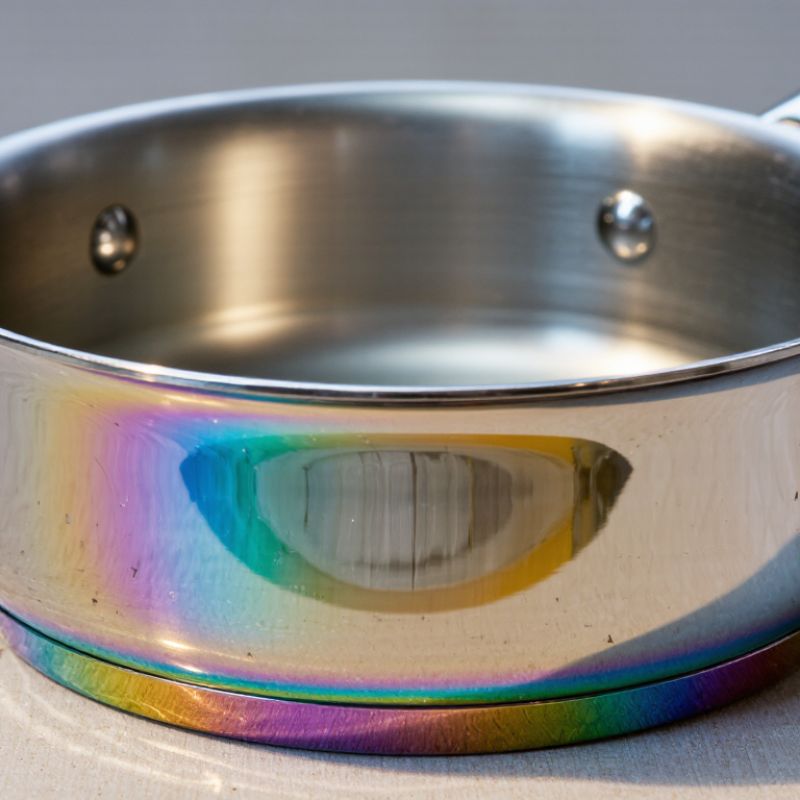
Rainbow discoloration on stainless steel cookware looks like a thin, shifting film across the metal. It may appear blue, purple, gold, bronze, or green. The colors often change when the pan moves under kitchen light. They can form rings near the base, cloudy patches on the sides, or flame-shaped marks around hot areas.
This effect is usually a heat-related surface change, not rust. High temperatures can alter the thin oxide layer on stainless steel. Minerals from hard water, salt, and leftover cooking oils may make the colors more visible. In my own kitchen checks, the marks appeared strongest after dry heating or fast temperature changes. They felt smooth, not raised.
Not usually dangerous.
Still, appearance alone cannot prove the cause. My first assumption was that every rainbow mark came from overheating. That was too simple. Detergent residue and mineral deposits can create similar patches. A soft cloth with diluted vinegar may reduce the color, followed by thorough rinsing and drying. Avoid abrasive powders and harsh scouring pads, because they can leave permanent scratches. If the surface feels rough, flakes, or shows deep pitting, I would stop using the cookware until its condition is assessed. A clean, smooth rainbow film is different from damaged metal, but careful inspection matters.
| Cause | What the Discoloration Looks Like | Typical Color Pattern | When It Commonly Appears | Surface Condition | Relative Concern | Recommended Response |
|---|---|---|---|---|---|---|
| Heat oxidation | A thin, reflective film with changing colors when the cookware is viewed from different angles. | Yellow, bronze, purple, blue, and gray bands or patches. | After empty preheating, high-heat cooking, or leaving cookware on a hot burner. | Usually smooth and bonded to the surface; it is not normally raised or flaky. | Medium | Allow the pan to cool, then clean with warm water and a non-abrasive cleaner. Avoid repeated empty overheating. |
| Hard-water mineral deposits | Cloudy rings, chalky spots, or a thin iridescent film, especially near the waterline. | White, gray, pale blue, or rainbow-like reflections. | After boiling water, steaming, air-drying, or repeated washing with mineral-rich water. | May feel slightly rough or powdery and can often be reduced with a mild acid solution. | Low | Soak briefly with diluted white vinegar or citric acid, rinse thoroughly, and dry immediately. |
| Salt pitting or salt deposits | Small cloudy marks, pinpoints, or irregular spots that may appear after cooking salty foods. | White specks, gray dots, or localized blue-green discoloration. | When salt is added before water reaches a boil or when salty liquid sits in the pan. | Deposits may wipe away; true pits feel like tiny depressions and are permanent. | Medium | Add salt after water begins heating, dissolve it fully, rinse promptly, and avoid prolonged contact with brine. |
| Detergent or rinse-aid residue | A dull, streaky, or slightly iridescent haze that follows water-flow or drying patterns. | Gray, blue, purple, or multicolor streaks. | After washing with excessive detergent, incomplete rinsing, or repeated dishwasher cycles. | Usually smooth and removable; the appearance may improve after hand washing. | Low | Wash with a mild dish detergent, rinse well, and dry with a soft cloth. Use only the recommended amount of detergent. |
| Food or starch film | Uneven cloudy patches or rainbow highlights beneath a thin layer of cooking residue. | Yellow, brown, gray, or bluish areas with irregular edges. | After cooking milk, pasta, rice, sauces, or other foods that leave proteins or starches behind. | May feel slightly greasy or tacky and is generally removable with soaking. | Low | Soak in warm soapy water, use a soft sponge, and avoid scraping with metal utensils. |
| Localized burner hot spot | A circular or oval discolored area matching the hottest part of the burner. | A central blue, purple, bronze, or brown ring. | When a small burner is used at high power or the pan base is unevenly heated. | Usually smooth; the pattern may be sharply defined and difficult to remove completely. | Medium | Match the burner size to the pan base, use moderate heat, and avoid heating an empty pan for long periods. |
| High-temperature temper colors | Distinct oxide colors that become more intense as the metal reaches higher temperatures. | Pale straw or yellow, brown, purple, blue, and blue-gray tones. | After severe overheating, especially when cookware is empty or nearly dry. | Smooth oxide coloration; heavy overheating may also cause warping or loss of surface finish. | High | Stop heating immediately and inspect the cookware for warping, cracks, loose handles, or other damage before reuse. |
| Contact with reactive cleaners | Uneven dullness, colored patches, or a loss of the original polished appearance. | Gray, brown, blue, or multicolor areas with irregular boundaries. | After exposure to strong bleach, chlorine-containing products, abrasive powders, or harsh oven cleaners. | May be etched, roughened, or permanently dulled rather than simply coated. | High | Discontinue the harsh product, rinse thoroughly, and use only cleaners labeled as suitable for stainless steel cookware. |
| Metal transfer from utensils or cookware | Dark streaks or shiny marks that resemble discoloration but sit on top of the steel surface. | Gray, black, or silver streaks; occasional rainbow reflections. | After scraping with metal tools or stacking cookware with trapped debris between surfaces. | Often removable because the transferred metal is deposited on the surface. | Low | Clean with a non-abrasive stainless-steel cleaner and use wooden, silicone, or plastic utensils when practical. |
High heat can create a thin oxide layer on the steel. Light reflects through it, showing blue, gold, purple, or bronze bands. The surface may still be intact.
Usually, the color is cosmetic and harmless. A smooth, odorless, solid surface is generally reassuring. Still, appearance alone cannot prove everything.
Yes. Calcium and magnesium deposits may remain after boiling. White mineral film can trap cooking residue and resemble heat staining.
Let the cookware cool completely. Use equal parts white vinegar and water for five to ten minutes. Wipe with a soft sponge, rinse well, and dry immediately.
Avoid steel wool, hard scrubbing, and harsh chlorine-based cleaners. They may leave scratches or dull patches. I once scrubbed too forcefully.
Use medium heat and preheat briefly. Do not leave empty cookware heating. Add salt after water begins boiling, then stir until it dissolves.
Check it when rainbow color appears with pits, cracks, peeling, rough patches, or a metallic smell. A warped base or loose handle also needs attention.
Rub it gently with clean fingers. It should feel even, not gritty or flaky. If damage remains, avoid high-heat cooking and consider professional assessment or replacement.
Rainbow discoloration on stainless steel cookware appears as blue, purple, gold, or brown bands that shimmer across the surface, especially around the base or sides of a pan. The main explanation for what causes rainbow color on stainless steel cookware is excessive or uneven heating, which creates a thin oxide layer that reflects light in different colors. This effect is usually cosmetic and does not mean the cookware is damaged or unsafe. However, severe warping, peeling, cracks, or persistent residue should be inspected before continued use.
Minerals in water, salt deposits, acidic ingredients, and cooking residue can also contribute to color changes, particularly when a pan is heated while dry or cleaned improperly. Most rainbow stains can be reduced with a gentle acidic cleaner, warm water, and a soft sponge. To prevent them, use moderate heat, avoid leaving empty cookware on a hot burner, dissolve salt after the liquid begins heating, and clean the pan soon after cooking. With proper care, stainless steel cookware can maintain its appearance and performance for a long time.

 Irmos Homes