Cooking tomatoes, vinegar, citrus, or wine in stainless steel is usually safe, but “nonreactive” does not mean completely immune. Heat, salt, time, and poor maintenance can still affect the pan’s surface and your food’s flavor. That is why learning how to cook acidic food in stainless steel safely matters for home cooks and professional kitchens.
Food science writer Harold McGee describes stainless steel as “a relatively nonreactive metal.” His observation explains why chefs often choose stainless steel for tomato sauces, lemon-based reductions, and wine braises. Still, experience adds an important caution. A pan with damaged surfaces, trapped residue, or low-quality construction may behave differently. Stainless steel is reliable, not magical.
Small details matter. Use a clean, heavy-bottomed pan with no visible pitting. Preheat it gently, then add oil before introducing acidic ingredients. Keep the heat moderate during long simmering. Stir sauces with a wooden or silicone utensil, especially when reducing them for several hours. Avoid leaving salty, acidic leftovers in the pan overnight. That habit can encourage stains, metallic flavors, or surface damage.
Watch the food closely.
A faint metallic taste should not be ignored. It may signal excessive heat, prolonged contact, or a pan that needs inspection. I have found that even experienced cooks sometimes rush this step, especially when preparing a busy dinner. That is worth reconsidering. The following seven tips focus on practical temperature control, cleaning habits, ingredient timing, and pan selection, helping you cook confidently while respecting stainless steel’s limits.
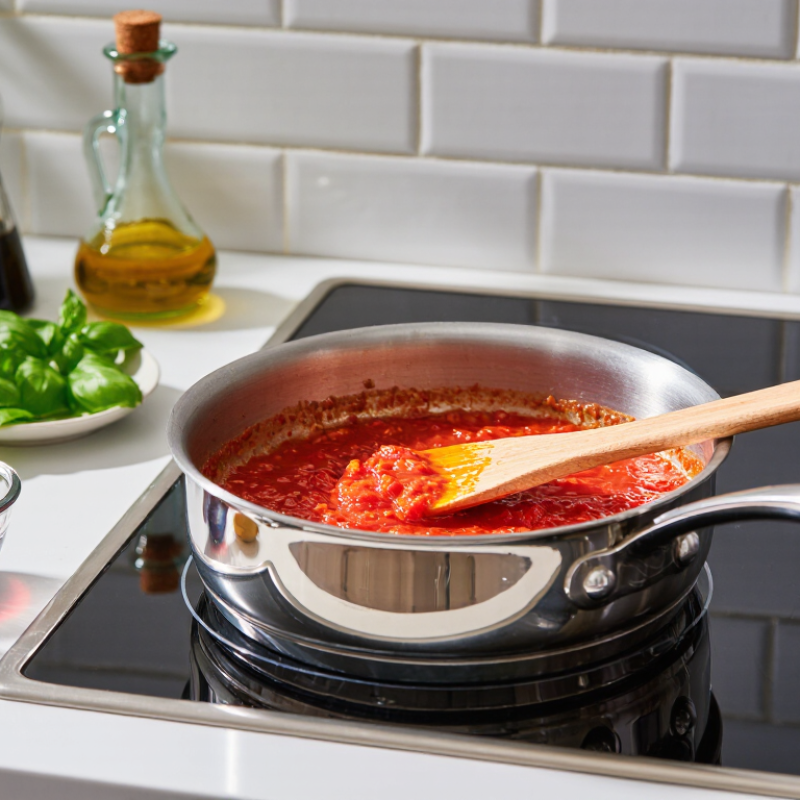
Stainless steel is generally a reliable choice for tomatoes, citrus, vinegar, and wine-based dishes. Its protective chromium-rich surface resists many everyday acids. However, “stainless” does not mean completely unaffected. Acid, heat, salt, and time can work together, especially in a new or poorly maintained pan.
Use a clean pan with no deep scratches, trapped food, or dried salt crystals. Add acidic ingredients after the cooking liquid begins heating, rather than leaving them against a dry surface. Keep the heat moderate and stir sauces regularly. A long, salty simmer may leave dull spots or a faint metallic taste, although this does not always indicate danger. Do not add salt to cold water and let it sit in the pan. That habit can encourage small surface pits.
Rinse the pan soon after cooking. Warm water and a soft sponge usually remove acidic residue safely. Avoid harsh scouring materials that damage the smooth finish. Do not store tomato sauce, lemon marinade, or vinegar dishes in the pan overnight; use a suitable food container instead. If the surface becomes deeply pitted, flakes, or changes food flavor, replace the pan. That judgment is not perfect. The food’s acidity, cooking time, salt level, and pan condition all matter. A quick visual check before cooking remains one of the most practical safety habits.
Understanding how acidic foods interact with stainless steel begins with pH. Lower pH indicates greater acidity. The values below are representative typical values; actual acidity can vary by variety, recipe, and processing.
Safe-use guidance: Stainless steel is generally suitable for acidic cooking because its passive chromium-oxide surface resists corrosion. For best results, use undamaged cookware, avoid prolonged storage of highly acidic or salty foods in the pan, bring acidic ingredients to a simmer gradually, stir with non-abrasive utensils, and clean and dry the cookware promptly after use.
When cooking tomatoes, citrus, vinegar, or wine, cookware choice matters as much as the recipe. Choose food-grade stainless steel with a thick, fully clad base. An 18/8 or 18/10 composition usually offers reliable corrosion resistance for home cooking. The label is useful, but construction matters more.
Check seven details before buying. The pan should feel balanced, sit flat, and have a tightly attached handle.
A heavy base spreads heat and reduces scorching, especially with acidic sauces. Smooth interiors are easier to clean and less likely to hold residue.
Avoid deep scratches, peeling surfaces, or unknown metal grades. A magnetic test can suggest the steel type, but it cannot confirm food safety.
Use the manufacturer’s material information instead.
Preheat gently, then add oil before the food touches the surface. Keep acidic dishes below a hard boil when possible. Stir with wood or silicone tools, not sharp metal edges.
Do not leave tomato sauce in the pan overnight, even when the pan appears spotless. I once stored lemony soup in stainless steel and noticed a faint metallic taste the next day. It was probably harmless, but it changed my habit.
Wash the pan after serving, dry it fully, and inspect the cooking surface regularly. Tiny stains are often cosmetic, not corrosion. Persistent pitting deserves replacement.
Before acidic ingredients meet stainless steel, I check the pan as carefully as the recipe. Look for deep scratches, rough spots, or tiny rust-colored marks. Most stainless cookware tolerates tomatoes, citrus, wine, and vinegar well. Condition matters. Wash the pan with warm water and mild detergent, then rinse away every film. Dry it fully with a clean towel. Water spots are harmless, but leftover grease can cause uneven heating. I once skipped this inspection and noticed burnt residue under a tomato sauce. That mistake changed my preparation routine.
Set the clean pan over low or medium heat before adding oil. Avoid heating an empty pan for too long. When a few water drops glide across the surface, reduce the heat slightly. Add oil, then place the ingredients in gently. The surface should feel hot, not aggressively smoking. If you use salt, add it after liquid or food enters the pan. Concentrated salt sitting on dry steel may encourage pitting over time. Never use harsh chlorine cleaners or abrasive scouring powders before cooking. They can dull or damage the surface. For stubborn residue, soak the pan and use a soft scrubber. I still sometimes misjudge the heat and create sticking. Lower heat and patience usually correct it. For leftovers, transfer acidic food to a food-safe container instead of leaving sauce in the pan overnight.
Acidic foods are generally compatible with stainless steel, but heat and time control matter. Tomato, vinegar, and citrus can increase metal migration during prolonged cooking. A 2013 study in the Journal of Agricultural and Food Chemistry found that acidic foods released more nickel and chromium from stainless-steel cookware, especially during longer cooking periods. EFSA’s 2020 scientific opinion set a tolerable daily intake for nickel at 13 micrograms per kilogram of body weight.
Heat tip: Start on medium heat, not high. Bring the sauce to a gentle simmer, then reduce the burner. Small bubbles should rise steadily. A hard boil can scorch the bottom and concentrate acidity. Stir every few minutes, especially when the sauce becomes thick. I sometimes rush this step, and the burnt ring shows it.
Time tip: Use the shortest cooking time that develops the flavor. Do not leave acidic sauce in the pan after cooking.
Temperature tip: Use a thermometer when meat or seafood is included. USDA Food Safety and Inspection Service guidance identifies 40–140°F (4–60°C) as the food-safety danger zone. Refrigerate leftovers within two hours, using shallow containers for faster cooling.
Surface check: Avoid chipped, heavily scratched, or visibly worn cookware. Rinse promptly after serving, then wash gently. A brief simmer is usually more sensible than hours of reduction.
After cooking acidic foods, I let the stainless steel pan cool for several minutes. I never pour cold water into a scorching pan. The sudden temperature change can warp the metal. I remove leftover sauce promptly, especially tomato, lemon, or vinegar-based mixtures.
I wash the pan with warm water, mild dish soap, and a soft sponge. Avoid steel wool and harsh chlorine cleaners, which may scratch or discolor the surface. For stuck residue, I soak the pan briefly, then loosen it with a wooden or silicone utensil. A small amount of baking soda can help with stubborn marks. Rinse thoroughly. Dry immediately with a clean towel to prevent water spots.
I used to stack pans while they were still damp. That habit left dull rings and trapped odors. Now I dry every surface, including the rim and handle connection. The pan needs air. I store it in a dry cabinet, leaving space between pieces when possible. Do not store acidic leftovers in stainless steel for long periods, even when the pan looks clean. Transfer food to a suitable container after it cools slightly. I also check the cooking surface before each use. Tiny pits or rough patches deserve attention, because cleaning cannot reverse serious damage.
Choose food-grade stainless steel with a thick, fully clad base. An 18/8 or 18/10 composition usually resists corrosion well. Construction matters more than the label alone.
The pan should feel balanced and sit completely flat. Its handle should attach tightly. A heavy base spreads heat and reduces scorching.
No. A magnet may suggest the steel type. It cannot confirm food safety or material quality. Use the manufacturer’s material information instead.
Wash it with warm water and mild detergent. Rinse away every film. Dry it completely with a clean towel. Inspect for deep scratches, rough spots, or rust-colored marks.
Use low or medium heat. Avoid heating an empty pan too long. Add oil when the surface feels hot, not smoky. Patience helps prevent sticking.
Keep acidic dishes below a hard boil when possible. Gentle heat reduces scorching and uneven cooking. Stir with wood or silicone tools.
It is better to transfer leftovers to a food-safe container. Acidic food should not remain in the pan overnight. I once noticed a faint metallic taste the next day. It was probably harmless, but I changed my habit.
Wash the pan after serving and dry it fully. Water spots are usually cosmetic. Persistent pitting deserves replacement. Tiny stains are not automatically corrosion.
Cooking acidic foods in stainless steel is safe when you understand how the cookware and ingredients interact. High-quality stainless steel is durable and generally resistant to acidic ingredients such as tomatoes, citrus, and vinegar, but prolonged contact, excessive heat, or damaged surfaces may affect cooking results. To learn how to cook acidic food in stainless steel safely, choose sturdy cookware with a smooth, intact interior, wash it before use, and dry it thoroughly. Adding ingredients to a properly preheated pan can also help reduce sticking.
Heat control and cooking time are equally important. Use low to medium heat whenever possible, avoid leaving acidic food simmering for much longer than necessary, and stir regularly to prevent scorching. After cooking, allow the pan to cool slightly before washing it with warm water and a gentle sponge. Remove residue promptly, dry the cookware completely, and store it in a clean, dry place to help maintain its appearance and performance.

Irmos Homes