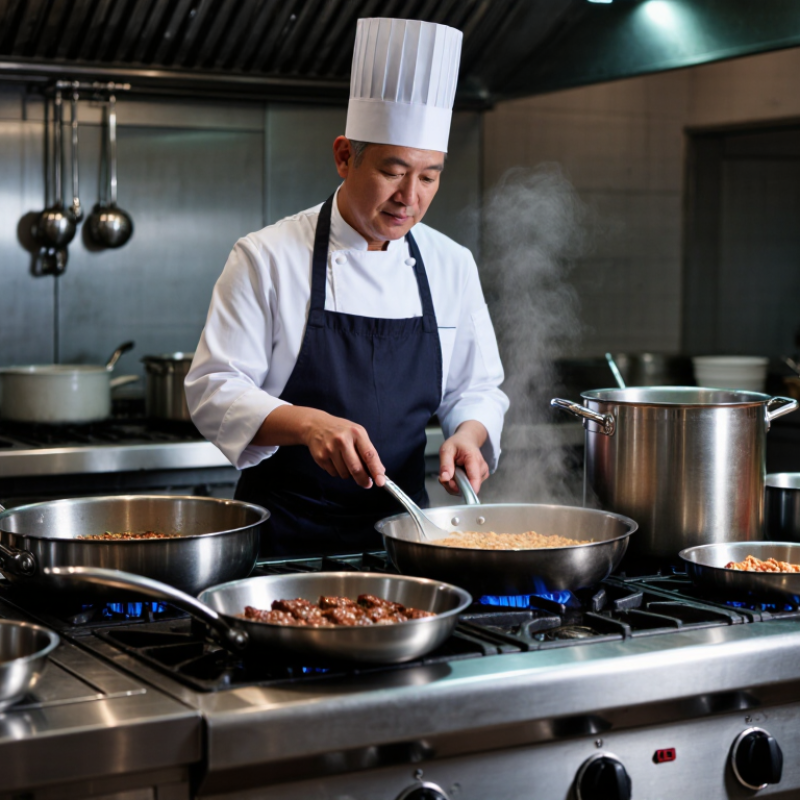
| 1 |
High durability for intensive use |
Stainless steel resists dents, abrasion, and routine handling better than many softer cookware materials. |
Stainless steel is an iron-based alloy containing at least 10.5% chromium by mass, which supports corrosion resistance. |
Chefs can use the same pans repeatedly during busy service with fewer replacements caused by surface wear. |
Long service life reduces the material and energy demand associated with frequent replacement. |
Very High |
| 2 |
Resistance to corrosion and staining |
The chromium-rich passive surface helps protect cookware from moisture, food acids, and normal kitchen exposure. |
Corrosion resistance depends on alloy grade, surface condition, cleaning practice, and exposure to salts or chlorides. |
Cookware remains serviceable and presentable through repeated cooking and washing cycles when properly maintained. |
Reduced corrosion can extend usable life and lower disposal frequency. |
Very High |
| 3 |
Neutral contact with food |
Stainless steel does not normally add a coating flavor and is suitable for many acidic, alkaline, and savory preparations. |
Food-contact suitability depends on the specific grade, manufacturing quality, surface condition, and applicable food-safety requirements. |
One pan can support sauces, reductions, vegetables, proteins, and stock preparation without changing cookware materials. |
A durable, reusable cooking surface avoids the recurring waste associated with disposable liners or frequently replaced coatings. |
Very High |
| 4 |
Easy sanitation and cleaning |
The smooth, non-porous surface does not readily absorb food residues or odors and can be cleaned using standard kitchen procedures. |
Effective sanitation still requires correct washing, rinsing, drying, and removal of food soils; stainless steel is not self-sanitizing. |
Simple cleaning routines support faster changeovers between dishes and reduce cross-contact risks. |
Cleanable, reusable cookware reduces dependence on single-use cooking accessories. |
Very High |
| 5 |
High-temperature cooking capability |
Uncoated stainless steel is well suited to searing, browning, deglazing, roasting, and other high-heat techniques. |
Unlike many polymer-based non-stick surfaces, the cooking surface is not dependent on a heat-sensitive non-stick film. |
Chefs can move directly from stovetop browning to oven finishing when the cookware construction and handles are oven-safe. |
Heat tolerance can help extend product life by reducing damage from normal high-heat professional cooking. |
Very High |
| 6 |
Versatility across cooking methods |
Stainless steel cookware is available for sautéing, boiling, steaming, braising, roasting, and sauce production. |
Compatibility varies by design: induction use requires a magnetic section or base, while oven limits depend on handles, lids, and construction. |
Multi-purpose pans reduce the number of specialized vessels needed at a workstation. |
Fewer required pieces can reduce total material use, storage demand, and replacement needs. |
Very High |
| 7 |
Predictable cooking control with layered construction |
Many professional pans combine stainless steel with a more conductive core to improve heat distribution and responsiveness. |
Pure stainless steel is less thermally conductive than copper or aluminum, so construction design strongly affects heat performance. |
Better heat distribution can reduce hot spots, improve browning consistency, and make temperature adjustments more predictable. |
Efficient heat transfer can reduce unnecessary burner time when the pan is correctly matched to the heat source. |
High |
| 8 |
No coating to chip, peel, or wear away |
An uncoated stainless-steel surface tolerates metal utensils and vigorous professional handling better than fragile surface films. |
Surface scratching may occur, but ordinary scratches do not represent peeling of a separate non-stick coating. |
Chefs can use whisks, spatulas, tongs, and other standard tools without managing coating-specific restrictions. |
Longer use and fewer coating-related replacements can reduce waste over the cookware life cycle. |
High |
| 9 |
Recyclability at end of life |
Stainless steel retains material value and can enter established metal-recycling systems where local collection is available. |
Stainless steel is recyclable, although recovery depends on collection infrastructure, product composition, and separation practices. |
Robust cookware can remain in service for years before end-of-life processing is required. |
Recycling allows much of the metal to be recovered instead of sent directly to landfill. |
High |
| 10 |
Professional appearance and standardization |
The consistent metallic finish supports a clean, organized appearance in open kitchens, demonstrations, and hospitality settings. |
Surface finish affects appearance and cleanability; brushed, polished, and satin finishes can have different maintenance requirements. |
Standardized cookware shapes and sizes make station organization, storage, and workflow planning easier. |
A long-lasting appearance can reduce premature replacement for cosmetic reasons. |
High |
 Irmos Homes