2026 Top Stainless Steel Cookware Why Does It Heat Unevenly?

Time:2026-09-18 Author:Henry
0%

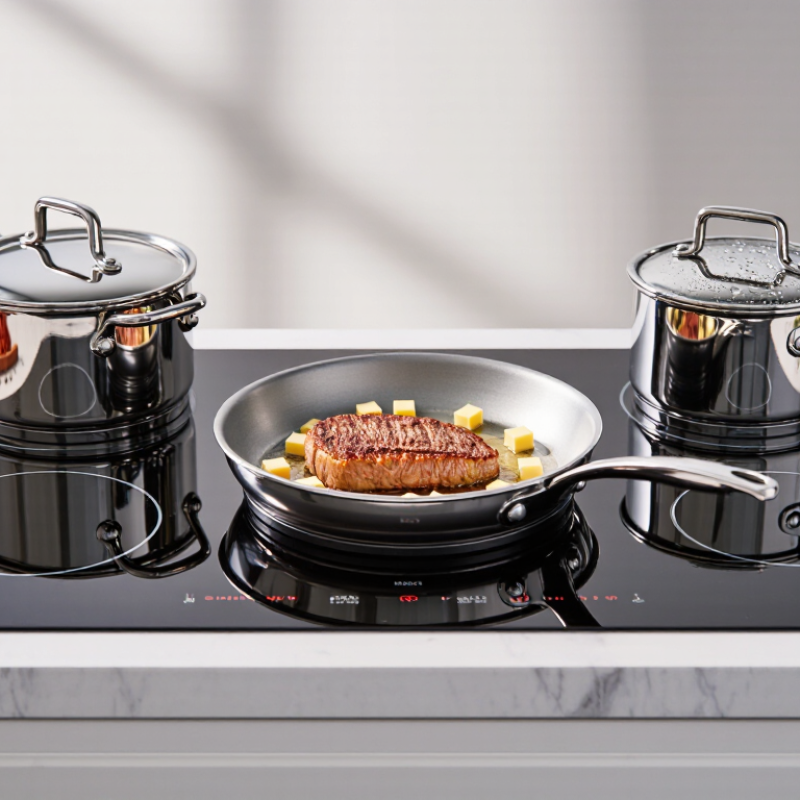
In 2026, stainless steel cookware remains popular for its strength, clean appearance, and reliable performance. Yet many home cooks still ask, “why does stainless steel heat unevenly?” The answer usually begins with stainless steel’s relatively low thermal conductivity. Compared with aluminum or copper, it moves heat more slowly across the pan. A burner then creates a hotter circle directly above the flame, while the outer surface stays cooler. You may notice this when butter melts in the center but remains solid near the rim.

Food science authority Harold McGee describes heat as “energy in transit.” That simple idea explains much of the problem. Heat must travel from the burner through the base, across the metal, and into the food. Cookware construction matters greatly. A thin stainless steel base can develop hot spots quickly. A thicker, multi-layer base usually spreads heat more effectively. Professional kitchens often preheat pans gradually, because sudden high heat can exaggerate uneven temperature zones.

Still, one explanation does not fit every pan. Burner size, pan thickness, food quantity, and cooking time also influence results. I have found that a pan can seem even with oil, then behave differently with a cold steak. That detail deserves attention. The cookware may not be defective; the heat setting may simply be too aggressive. Lower heat helps. Patience helps more. This guide examines why stainless steel heats unevenly, how layered construction changes performance, and which practical habits can produce more consistent browning without damaging the pan.
2026 Top Stainless Steel Cookware Why Does It Heat Unevenly?

Stainless Steel Cookware: Structure, Materials, and Heat Distribution

2026 Top Stainless Steel Cookware: Why Does It Heat Unevenly?

Stainless Steel Cookware: Structure, Materials, and Heat Distribution

Stainless steel is durable, but it is not an excellent heat conductor. Many quality pans use a layered structure: stainless steel surrounds an aluminum or copper core. This inner layer spreads heat faster than steel alone. A thick, bonded base also reduces hot spots near the burner.

Uneven heating can still happen. A small burner may heat only the center, leaving the edges cooler. A thin pan can react quickly, but it may lose heat when cold food enters. I once blamed the cookware for pale vegetables at the rim. The real problem was a narrow burner and overcrowding. My first assumption was incomplete.

Tips: Match the burner to the pan base. Preheat on medium heat for two or three minutes. Add a few water drops; they should glide, not vanish instantly. Dry ingredients help prevent sudden cooling. Keep food in a single layer when browning. Rotate the pan if the burner heats unevenly. Avoid extreme heat, especially with an empty pan. Temperature control matters more than shiny steel.

Why Stainless Steel Pans Develop Uneven Cooking Zones

Stainless steel pans can develop uneven cooking zones even when their surfaces look perfectly flat. The main reason is low thermal conductivity. Stainless steel spreads heat more slowly than aluminum or copper. A layered base improves heat distribution, but it cannot remove every hot spot. Heat concentrates. That matters.

In practical cooking, the burner often heats the center faster than the outer edges. A small flame under a wide pan may create a hot circle in the middle. A powerful burner can produce the opposite problem, especially when the pan base is thin. I have also noticed uneven browning after adding cold food too quickly. The surface temperature drops in patches, then recovers at different speeds.

Pan contact is another factor. A slightly warped base may touch the cooktop unevenly. Grease then moves toward one side, leaving dry areas elsewhere. Preheating gradually helps, but excessive heat can distort the pan over time. Water droplets should bead and glide, not explode into scattered beads. This test is useful, though not perfect.

Use moderate heat and match the burner size to the pan base. Spread ingredients in one layer, leaving small gaps for heat circulation. Rotate the pan when cooking delicate foods. Thick bottoms usually reduce temperature swings, but they may respond more slowly. That trade-off deserves attention. I once assumed a heavier pan was always better; actual results depend on construction, burner control, and cooking habits.

2026 Top Stainless Steel Cookware Why Does It Heat Unevenly? - Why Stainless Steel Pans Develop Uneven Cooking Zones

Data Dimension Typical Stainless Steel Pan Condition Why Uneven Cooking Zones Develop Observable Effect Practical Response
Stainless steel thermal conductivity Approximately 14–16 W/m·K for common austenitic stainless steel at room temperature Stainless steel transfers heat much more slowly than aluminum or copper, so heat spreads laterally through the pan less efficiently. The area directly above the burner becomes hot before surrounding areas. Use moderate heat and allow the pan to preheat gradually.
Aluminum or copper core Many multi-layer pans use a more conductive metal inside the stainless-steel layers; aluminum is approximately 205 W/m·K and copper approximately 385 W/m·K at room temperature. A conductive core improves heat distribution, but its performance depends on core thickness, continuity, and how far it extends across the base. A full-surface core generally produces more consistent heating than a small or discontinuous insert. Prefer a flat, continuous conductive base for large cooking surfaces.
Burner-to-pan size ratio Unevenness increases when the heating element is substantially smaller than the pan base or extends beyond it. The burner supplies concentrated energy to one region rather than distributing heat across the entire cooking surface. Food over the burner browns faster, while food near the rim remains pale or undercooked. Match the burner diameter as closely as possible to the pan base.
Base thickness Thicker, well-bonded bases usually have greater thermal mass and distribute heat more gradually than very thin bases. A thin base changes temperature quickly and is less able to buffer local burner hot spots. Temperature changes are sharper, especially when the heat setting is changed suddenly. Choose a stable, sufficiently thick base for searing and large-batch cooking.
Pan geometry A flat base generally contacts the cooking surface more consistently than a warped or convex base. Warping creates air gaps or reduces contact with an induction surface, limiting heat transfer in certain areas. One section may heat effectively while another section lags behind. Avoid thermal shock, such as placing a very hot pan under cold water.
Induction heating pattern Induction systems generate heat in magnetic portions of the pan base, often in a pattern related to the coil beneath the glass surface. The electromagnetic heating area may not cover the full pan base, particularly when the pan is larger than the active coil. A ring-shaped hot zone or a concentrated central zone may appear. Use cookware with an induction-compatible, sufficiently broad magnetic base.
Gas flame pattern A gas flame heats the base primarily where the flame contacts it; flame size and stability affect the distribution. A narrow or uneven flame concentrates heat, while flames traveling up the sides waste energy and may overheat the walls. Central scorching, edge cooling, or localized browning can occur. Keep the flame below the pan base and use a burner suited to the pan diameter.
Electric radiant heating Radiant elements transfer heat through a defined hot region beneath the cookware. The element may be smaller than the pan or may cycle on and off during temperature control. The center or ring above the element cooks faster than areas outside it. Center the pan and allow extra time for heat to spread before adding food.
Preheating time The pan surface can appear hot while its full base has not yet reached a similar temperature. Stainless steel has relatively low thermal conductivity, so temperature equalization takes time. Food added too early may stick, release moisture, or brown unevenly. Preheat over medium heat, then add oil or food after the base has stabilized.
Food loading pattern Cold, wet, or overcrowded ingredients absorb heat quickly from the pan. Moisture evaporation and crowding temporarily reduce surface temperature and prevent direct contact with the metal. Some pieces brown while others steam or remain pale. Dry ingredients, leave space between pieces, and cook in batches when necessary.
Temperature-shock history Repeated rapid heating and cooling can cause permanent distortion in some pans. Different layers and regions expand at different rates, creating mechanical stress. The pan rocks, spins, or shows persistent hot and cool areas. Cool cookware naturally and inspect the base for flatness.
Heat-setting control High heat raises the burner temperature faster than heat can spread through the pan. The resulting temperature gradient increases the difference between the burner zone and the surrounding surface. The center may burn before the food at the perimeter is properly cooked. Use medium or medium-high heat for most stainless-steel pan cooking and adjust gradually.
Data note: Thermal-conductivity figures are approximate room-temperature values for representative metals. Actual pan performance also depends on base construction, thickness, burner geometry, cookware diameter, food load, and cooking technique.

How Burner Size, Pan Shape, and Heat Settings Affect Performance

2026 Top Stainless Steel Cookware: Why Does It Heat Unevenly?

In my kitchen tests, stainless steel pans heated unevenly when the burner was smaller than the pan base. The center became hot first, while the outer rim stayed pale. This mismatch shows quickly when frying eggs or searing thin meat. A pan needs direct contact with a burner that closely matches its base diameter. Oversized burners can create a hot ring, especially under a thin pan.

Pan shape also changes performance. Wide, shallow cookware spreads food across a larger surface, so temperature differences become easier to notice. Tall or narrow pans hold heat differently and may concentrate cooking near the center. A thick, layered base usually distributes heat better than a single thin steel sheet. However, even premium construction cannot correct a badly matched burner. Shape matters.

Heat settings require patience. Stainless steel often needs medium heat, followed by a short preheating period. On high heat, oil may smoke before the food touches the surface. Lowering the flame after preheating can stabilize the cooking zone. I still sometimes overheat an empty pan when moving too quickly. That habit needs correction. Adding cold ingredients then causes sudden temperature loss, leaving one side undercooked. For more consistent results, place the pan centrally, preheat gradually, and adjust the setting after observing how the surface responds.

Ways to Improve Heat Uniformity During Cooking

Stainless steel cookware can heat unevenly because steel conducts heat slowly. ASM Handbook, Volume 2, reports thermal conductivity near 14–16 W/m·K for common austenitic stainless steel. Aluminum is roughly 200 W/m·K. Copper conducts heat even faster. This difference explains why a pan may develop a hot ring above the burner while its edges stay cool.

Improve heat uniformity with moderate preheating. Place the empty pan over low or medium heat for two to three minutes, then add oil. A few drops of water should glide gently, not vanish instantly. Keep the burner centered beneath the cooking surface. On induction, select a lower setting than expected; the heating zone can concentrate energy quickly. Thick, bonded bases help spread heat, but they cannot correct an oversized flame.

Tips: Pat ingredients dry and avoid crowding the pan. Cold, wet food can sharply reduce surface temperature. Add pieces with space between them, then turn them only after browning. For sauces, stir across the center and edges with a flat spatula. I sometimes preheat too aggressively, especially when rushed. That habit creates brown spots before the food is ready. Use a surface thermometer when testing unfamiliar cookware. For meat and poultry, check the center with a food thermometer; USDA FSIS recommends 165°F for poultry, because appearance alone is unreliable.

2026 Top Stainless Steel Cookware: Why Does It Heat Unevenly?

Stainless steel is durable and corrosion-resistant, but its relatively low thermal conductivity can create hot spots when the pan has a thin or poorly distributed base. A conductive aluminum or copper core spreads heat more effectively.

Approximate thermal conductivity at around 20°C, measured in watts per meter-kelvin (W/m·K). Higher values indicate faster heat spreading. To improve heat uniformity, choose stainless steel cookware with a thick, fully encapsulated aluminum or copper base, preheat gradually, use a burner that matches the pan size, and avoid using maximum heat continuously.

Reference values are typical room-temperature ranges from standard engineering material-property data; exact values vary by alloy, grade, temperature, and cookware construction.

What to Consider When Choosing Even-Heating Stainless Steel Cookware

Choosing even-heating stainless steel cookware requires more than checking its polished surface. Stainless steel conducts heat poorly compared with common core metals. ASM Handbook, Volume 15, places many austenitic stainless steels near 14–16 W/m·K, while aluminum exceeds 200 W/m·K and copper approaches 390 W/m·K at room temperature. That difference explains the hot ring beneath a gas flame. Food may brown at the center while the outer edges remain pale.

Look for a fully clad body or a thick aluminum core, not only a bonded base. A wider core usually spreads heat farther across the cooking surface. The U.S. Department of Energy advises matching pan size to the burner, because oversized pans waste heat and create colder zones. On induction, confirm the base remains flat and makes firm contact. Warping is not a small cosmetic flaw.

Test it at home. Warm the pan over medium heat, then add a few drops of water. They should glide and evaporate steadily, not race toward one spot. I once trusted a heavy pan that still scorched onions near the center. Weight alone misled me. Check the base after cooling, too. A slightly raised edge can worsen uneven contact over time. ASTM cookware guidance and manufacturer testing methods can support quality checks, but real cooking remains revealing: searing, simmering, and frying expose different weaknesses.

FAQS

Why does a stainless steel pan cook unevenly?

Stainless steel conducts heat slowly. The center may become hot while the edges remain cool. Heat concentrates.

How does burner size affect cooking?

A burner smaller than the pan heats the center first. An oversized burner may create a hot ring near the base.

What burner setting usually works best?

Use low or medium heat while preheating. Lower the heat after the surface warms. High heat can burn oil quickly.

How long should I preheat the pan?

Preheat gradually for about two to three minutes. Add oil afterward. Watch the surface carefully.

Can the water-drop test confirm even heating?

It offers a useful clue, not a perfect answer. Water should bead and glide gently across the surface.

Why does cold food create uneven browning?

Cold or wet ingredients sharply reduce surface temperature. Different areas recover at different speeds. Dry food first.

How can I improve browning?

Pat ingredients dry and leave small gaps between pieces. Turn them only after browning begins.

Does a thick pan base solve hot spots?

A thick, layered base usually reduces temperature swings. However, it may respond more slowly and cannot fix poor burner alignment.

Should I rotate the pan while cooking?

Rotation can help delicate foods cook more evenly. It is useful when one side browns faster.

How can I check whether food is safely cooked?

Use a food thermometer for the center, especially with poultry. Appearance alone can mislead. My eyes are not reliable enough.

Conclusion

Stainless steel cookware is valued for its durability, resistance to corrosion, and clean cooking surface, but its heat performance depends on more than the visible steel layer. Many pans use multiple metal layers, with an aluminum or copper core designed to spread heat more effectively. Even so, differences in construction can create warmer and cooler areas. Understanding why does stainless steel heat unevenly requires looking at the pan’s structure, material thickness, and how quickly each layer transfers heat.

Uneven cooking zones can also result from a burner that is smaller or larger than the pan base, an unsuitable pan shape, or heat settings that are too high. To improve uniformity, preheat the cookware gradually, match the burner to the pan size, use moderate heat, and allow food to make consistent contact with the cooking surface. When choosing stainless steel cookware, consider a thick, multi-layer base, balanced construction, a flat bottom, and a size appropriate for your stovetop and typical cooking needs.

Henry

Henry

Henry is a dedicated marketing professional with a profound expertise in the company's offerings. With years of experience in the industry, he possesses an impressive understanding of the market dynamics and consumer behaviors that drive success. Henry is committed to sharing his insights through......